Short Bowel Syndrome (SBS) is one of the most complex conditions in gastrointestinal medicine. It challenges patients, families, and clinicians alike with its daily demands and long-term complications. Because the small intestine is critical for absorbing nutrients and fluids, losing too much of it—whether due to surgery, congenital defects, or disease—leaves the body in a constant state of deficit.
Managing SBS requires a multifaceted approach, and no two patients are the same. Over the years, treatment strategies have evolved from lifesaving interventions like Total Parenteral Nutrition (TPN) to emerging regenerative therapies designed to restore lost intestinal function. Understanding the range of options available is essential for families navigating this journey, as well as for healthcare professionals seeking to improve outcomes.
The Foundation: Nutritional and Medical Support
The first line of defense in SBS is almost always nutritional support.
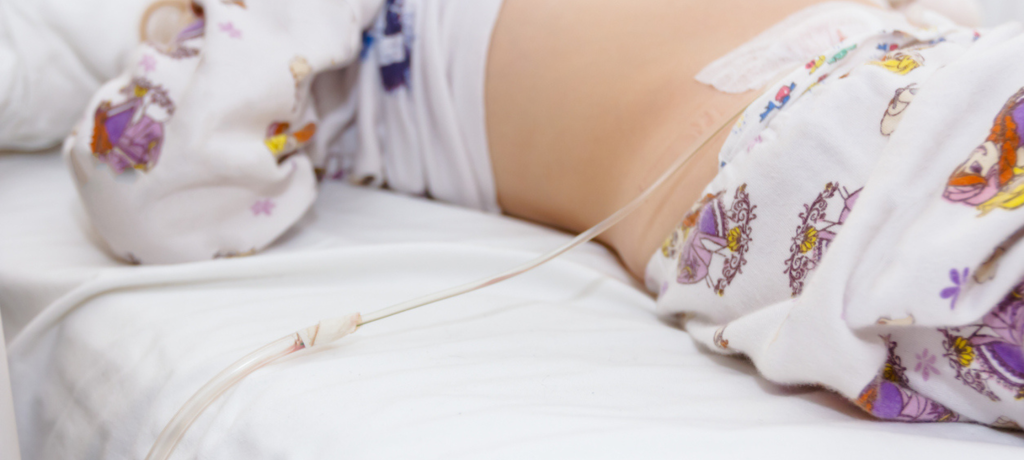
- Total Parenteral Nutrition (TPN): As outlined by MedlinePlus, TPN delivers essential nutrients intravenously, bypassing the digestive tract completely. It can be lifesaving, especially for infants and children with severe SBS. However, TPN carries risks: catheter infections, liver disease, and metabolic complications. Many families describe the daily regimen as overwhelming, with infusion pumps, sterile technique, and strict routines dominating home life.
- Specialized diets: In some cases, carefully tailored diets and supplements can help maximize absorption. Dietitians play a key role, recommending specific formulas, high-calorie foods, or specialized fats to optimize what the intestine can still process.
- Medications: Drugs like teduglutide have been approved to enhance absorption by increasing the surface area of the intestinal lining. These can reduce dependence on TPN, but they do not eliminate the underlying problem of intestinal loss.
Nutritional and medical therapies remain essential, but they often represent ongoing management rather than long-term resolution.
Surgical Approaches: Reshaping What Remains
When nutrition and medications alone aren’t enough, surgery may play a role.
- Bowel lengthening procedures: Surgeons can sometimes restructure the intestine to increase surface area, slowing food movement and improving absorption.
- Tapering procedures: In cases where the intestine has dilated, surgery may restore function by narrowing it, making nutrient absorption more efficient.
- Serial transverse enteroplasty (STEP): A specialized surgical technique that lengthens and reshapes the intestine.
These procedures can improve function for some patients but are not without risks. Multiple surgeries may be required, recovery can be lengthy, and outcomes vary significantly depending on the patient’s age, remaining bowel length, and overall health.
The National Organization for Rare Disorders (NORD) notes that while surgery can improve quality of life, it rarely eliminates the need for ongoing nutritional support.
Intestinal Transplant: The Last Resort
For patients with the most severe SBS—especially those who develop life-threatening complications from TPN—intestinal transplantation may be considered.
This is a major procedure, often performed at specialized centers such as Cincinnati Children’s Hospital or UCLA Health. Transplantation can restore digestive function and reduce or eliminate dependence on TPN.
But it comes with enormous challenges:
- Lifelong immunosuppression to prevent organ rejection.
- Significant surgical risk.
- Limited availability of donor organs.
- High cost and intensive follow-up care.
For these reasons, transplantation remains a last resort. It can be life-changing for some patients but is not a practical or safe option for the majority.
The Emerging Frontier: Regenerative Medicine
The newest and most exciting area of SBS care is regenerative medicine—therapies designed to help the body regrow functional intestine.
- Cell and tissue therapies: Scientists are experimenting with stem cells and biologics to repair or replace intestinal tissue.
- Bioengineered scaffolds: Researchers are creating structures that encourage new intestinal growth.
- Device-based therapies: Companies like Eclipse Regenesis are pioneering surgical devices that stimulate the intestine’s natural regenerative processes. Instead of bypassing or replacing the intestine, these approaches harness biology itself to restore surface area and function.
The National Institutes of Health (NIH) recognizes regenerative medicine as one of the most promising frontiers in modern healthcare. For SBS, it represents a shift from managing symptoms to addressing root causes—transforming the condition from one defined by lifelong dependence to one defined by potential independence.
Comparing the Options
To understand how these approaches fit together, it helps to see them as a continuum:
- Nutritional support (TPN, diets): Immediate, lifesaving, but burdensome and risky long-term.
- Medications: Helpful for some, but limited in scope.
- Surgical procedures: Can improve function, but rarely resolve SBS completely.
- Intestinal transplant: Life-saving in select cases, but high risk and high cost.
- Regenerative medicine: Still emerging, but offers the possibility of rebuilding what’s been lost.
Each option has strengths and limitations. The right choice depends on patient age, underlying condition, remaining bowel length, and overall health.
The Bottom Line
SBS treatment is not one-size-fits-all. Patients and families navigate a landscape of therapies that range from life-sustaining to potentially transformative. Nutritional support and surgery remain critical, transplants serve as a last resort, and regenerative medicine is pushing the boundaries of what’s possible.
As innovation accelerates, the future of SBS care may look very different from today. The hope is not just survival, but restoration—a world where patients can live with more independence, fewer complications, and a brighter quality of life.
To learn more about regenerative device therapies under development, visit eclipseregenesis.com.
Because the future of SBS care is no longer only about managing what’s missing—it’s about imagining what can be rebuilt.